Posts tonen met het label gender. Alle posts tonen

vrijdag 8 juni 2018

Teun Seuren presents I Decline


God is a Woman!? project
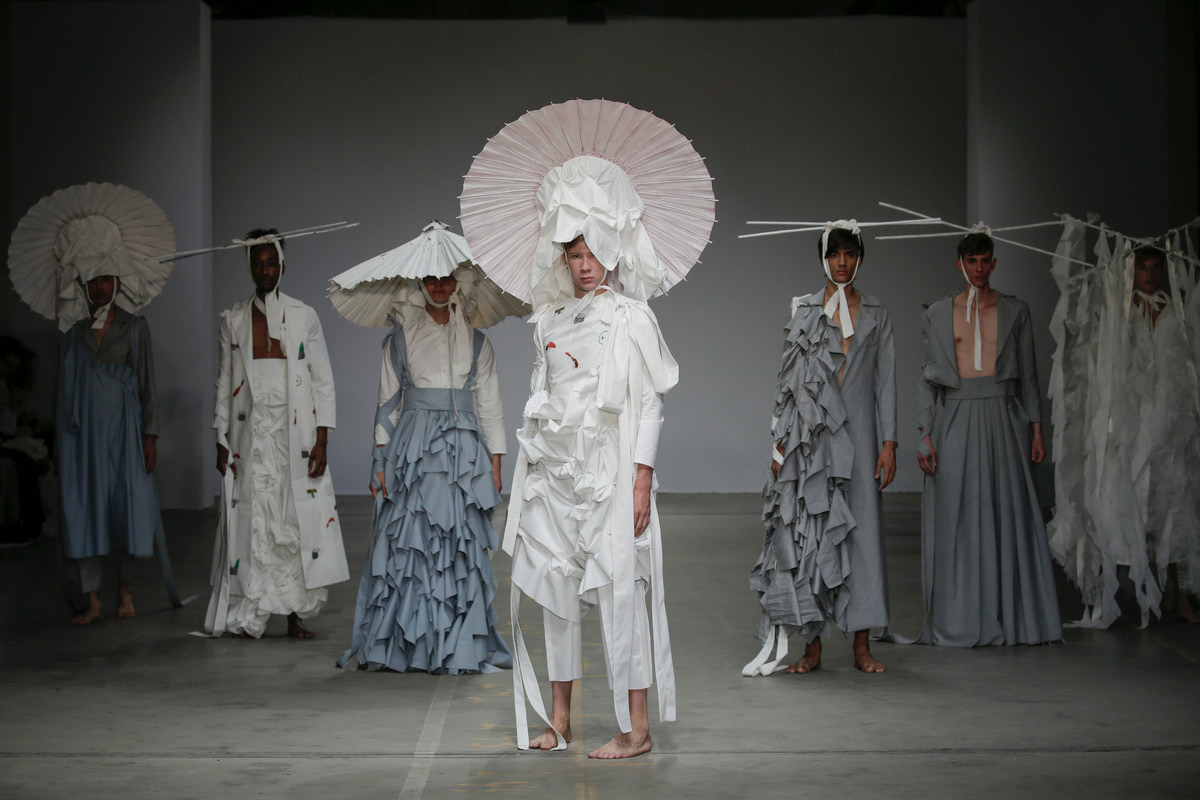
Teun Seuren, is a 25 year old Dutch designer from Limburg. Last year he graduated from HKU University of the Arts Utrecht as a Fashion Designer specialized in men's fashion. His work gives of a message by posing questions with different perspectives such as homosexuality gender and vulnerability. For this collection, 'I Decline', he has been inspired by the theme of the FASHIONCLASH Festival 2018, Fashion, My Religion!.
His collection explores the relationship between religion and gay power, making a statement about being gay and having faith.

TEUN's collection will be presented at the Show Program on Saturday the 16th of June. Get your tickets here.


You can also see Teun's work at Centre Céramique as part of God is a Woman!? project exhibition.
More information about the project:here 


What made you realize that you wanted to work in (fashion) design?
I realized that I wanted to work in fashion after making the mistake to study electrical engineering. This wasn't the right career for me and I had to make a radical change. One of my teachers gave me the recommendation to visit a fashion school. When I stepped inside that school I knew thas was the place for me and it felt like I was home.

Why did you choose fashion?
As a child I always loved to dress up and play around in my grandma's workspace. Once I made an entire collection for my nieces, made from old fabrics and curtains. This was my first experience with fashion and I loved it. I can definitely say that I got the sewing skills from my grandma, and I am really grateful that she let me help her all the time, even when I was always standing in her way because of my curiosity.

What would you say are your main achievements in your career?
After I graduated I was selected for the "Lichting Show" at Amsterdam Fashion Week, this was definitely the icing on the cake after 4 years of hard work. I didn't win but being part of this amazing event was worth all the hard work.

What are your sources of inspiration?
Mostly I get inspired by things that frustrate me. I want to highlight these frustrations and transform them into something good.

dinsdag 24 oktober 2017

Debora Dax - 6 OBJECTS - Projecting Identity Expressions

FASHIONCLASH Fashion Film Festival presents short documentary '6 OBJECTS - Projecting Identity Expressions' by Debora Dax.

The artistic documentary (10min) gives the audience insight into the experiences, wishes and needs of people who consciously express their identity and enables questions about how we experience, judge or define identity.

Six people with various backgrounds talk about their identity using the most meaningful object for their transformation and/or gender expression. The characters do not come into view, but express their identity through this object by means of another's body. The artistic documentary offers the audience a different perspective on identity.

A concept developed and directed by Debora Dax.

You can see this documentary 3 and 4 November at the Exhibition at Lumière Cinema. 

www.deboradax.com

vrijdag 26 augustus 2016

Young Thug wears Alessandro Trincone on album cover

Young Thug released a new album and it is already a cult talk of the town because of the album cover for his album No, My Name Is JEFFERY. The cover features the Atlanta rapper posing severely in a skirt-like garment. The piece is part of Italian designer Alessandro Trincone's “Annodami” collection, the winner of FASHIONCLASH Festival 2016 talent Award.  Garfield Larmond shot the already iconic cover in which a world know repper wears a gender-neutral garment. 

Alessandro graduated with with honors from POLIMODA International Institute. His graduation collection Kings and Queens, was selected to be the best of POLIMODA’s graduation class of 2015. Following he took a scholarship at “Osaka Bunka Fashion College” in Japan. From then on, the Japanese culture has been a huge source of inspiration for his designs. This is shown in his new collection: 'Annodami', which talks about his own experience with oppression and self fulfillment.

FASHIONCLASH Festival 2016 -  Alessandro Trincone


donderdag 25 juni 2015

Tabula Rasa - Maastricht Colours You

Tabula Rasa 'Spectrum' performance for Maastricht Colors You

Last weekend, June 20, city of Maastricht had to the honor to host Roze Zaterdag (Pink Saturday). Under the title 'Maastricht Colors You' all over the city festivities and events where organized around the context to celebrate diversity.
For this occasion we presented the Tabula Rasa dance performance at Centre Céramique.
Project Sally Maastricht, FASHIONCLASH and designer Mieke Kockelkorn started a partnership with the aim to provide the awareness and transcend conservative gender roles in our society and a message of freedom. In a range of workshops, transgender youngsters are working with Mieke and Project Sally to create a collection that will be reflected through various dance performances. Tabula Rasa is a gathering of different people who clash dance and fashion with purpose to engage a dialogue with the society.

Project Sally Maastricht organizes Choreographic Residencies Maastricht, and for Tabula Rasa they invited promising Franch choreographer Martin Harriague to develop a performance based on the FASHIONCLASH Festival 2015 theme of gender and the festival's campaign. The first presentation took place during FASHIONCLASH Festival 2015. The aim is to develop the project further and to invite more choreographer, designers and dancers to engage with the project.

For the first presentation of Tabula Rasa, Martin Harriague developed a striking contemporary dance performance 'Spectrum'. Mieke Kockelkorn designed the costumes and dancers Patrizio Bucci and Morgane Michel brought the performance to live.

http://www.projectsally.nl
http://www.martinharriague.com
http://www.miekekockelkorn.nl

all images are courtesy of FASHIONCLASH

donderdag 18 juni 2015

Een ode aan mannen met lang haar

Jared Leto, ©Getty Images
#6 Modemuze x FASHIONCLASH blogpost

door Japke van Uffelen MA student Museumstudies 

Ieder mens heeft het: haar. De een (ietsje) meer dan de ander, afhankelijk van zowel biologische als culturele factoren. Van nature heeft de een krullend haar, de ander overbeharing op armen en benen en weer een ander kan maar geen baard laten groeien. 

Door deze biologische kenmerken te vervormen wordt de verschijningsvorm van het haar maatschappelijk aanvaardbaar gemaakt. Per cultuur, tijd en sekse verschillen de normen en functies van deze verschijningsvorm. Net zoals kleding geeft haar vorm aan de eigen identiteit. Het lichaam wordt daarbij niet als een vaststaand gegeven gezien waarbij genetisch is bepaald hoe iemand eruitziet, maar als een project dat getransformeerd kan worden. Doordat haar een van de eerste fysieke kenmerken is die wordt gezien als we naar elkaar kijken, roept het direct een reactie of oordeel op. [1]

woensdag 17 juni 2015

Mooi(e) man

Pruik van Egbert de Vrij Temminck, burgemeester van Amsterdam, 
1780-1799, Amsterdam Museum
#6 Modemuze x FASHIONCLASH blogpost

door Ninke Bloemberg, conservator mode en kostuums Centraal Museum Utrecht 

Eeuwenlang hebben mannen het schoonheidsideaal voor vrouwen bepaald: stevige ronde bosten, blanke huid of een strak ingeregen taille. Sinds het begin van de twintigste eeuw lijkt de man een koekje van eigen deeg te krijgen. De uberseksueel en metroman zijn al een aantal jaar passe, ook voor de menaissanceman [1] (hipster) lijkt het tij te keren. “Deze man houdt van mannelijk, een pak mag, maar zijn mannelijkheid is vooral te zien aan zijn beharing: de baard. Menaissance verwijst natuurlijk naar het renaissancetijdperk en betekent letterlijk wedergeboorte, en de mannenmode-industrie profiteert hiervan.” Zo signaleerde Georgette Koning vorig jaar. Deze zomer lijken de heren voor een “beardstache” te kiezen, aldus de Business Insider van 9 juni jl. [2] Een klein baardje en vooral: een snor. Hoe dan ook, baarden komen en snorren gaan. Feit lijkt wel dat de moderne man tegenwoordig goed verzorgd voor de dag moet komen.

Mannelijke ijdelheid is echter niet alleen iets van deze tijd. Schrijver Justus van Effen levert in zijn maatschappij kritische tijdschrift De Hollandse Spectator regelmatig commentaar op de achttiende-eeuwse samenleving. Zo meldt hij op 10 december 1733 dat een aantal modieuze mannen in hun sociëteit een ‘magnifiek nooteboom’ meubel dat dienstdoet als kaptafel. Daarop liggen ‘ontelbare’ kammen van verschillende grootte, staan maar liefst twaalf potjes met haarverzorgingsproducten, bevinden zich sierlijke poederdozen – voor de pruiken – en bovendien potjes ‘om de lippen, zelfs in de schraalste noorde wint, zagt en blozend te houden.’ [3]

Portret van een lid van de familie Van der Mersch, 
Cornelis Troost, 1736, Rijksmuseum
Soms hadden de heren – aldus Van Effen – producten die ‘aan de meeste Dames […] nog onbekend’ waren. Van Effen steekt hier duidelijk de draak met de overvloedige Soms hadden de heren – aldus Van Effen – producten die ‘aan de meeste Dames […] nog onbekend’ waren. Van Effen steekt hier duidelijk de draak met de overvloedige verzorgingsproducten voor sommige mannen uit zijn tijd. De man besteedde in de achttiende eeuw dan ook de nodige aandacht aan zijn uiterlijk. In het etiquetteboek uit 1735 van C. Van Laar is bijvoorbeeld te lezen dat ‘men alle deelen van ons Lighaam netjes en proper houdt, zonder nogtans van die Vrouwelyke middelen daartoe te gebruiken.’ Begaven de heren zich echter teveel op het terrein van de dames, dan werden ‘zyne verwyfde manieren’ als ‘ongemanierdheid’ gezien. [4] Bovendien heeft lichaamsbeharing nut: ‘Het haair schijnt den mannen […] achtbaarheid te gegeeven’. De baard groeit niet voor de rijpheid en is ‘derhalven een zeker teken van mannelijke sterkte.’ [5] Mocht het haar – met name op het hoofd – niet willen groeien, dan waren er verschillende middelen om dit te verbeteren. In 1778 verscheen postuum een zeer veelzijdig receptenboek van de hand van de arts, pastoor, landbouwkundige Noël Chomel. Hierin zijn veel recepten te vinden en een belangrijk deel van het werk gaat over de vraag hoe men gezond kan blijven (al hoop ik dat de lezer deze destijds niet te serieus heeft genomen, want echt gezond komt het niet over). Naast kookrecepten zijn er ook tips ‘om het haair te doen groeien’: ‘Neemt bijen, droogt ze in een pot, maakt ze dan tot een poeder, en strooit het op de kaale of hairlooze plaatzen. Of mengt het poeder met olie of pomade, en bestrijkt er de haairlooze plaatzen en haairen mede.’ [6] Magnifiek! En anders waren er altijd nog de pruiken. Soms zelfs van vrouwelijk haar gemaakt (of van paarden- of kamelenhaar), dat deerde blijkbaar niet…

Aandacht voor het uiterlijk en gebruik van allerlei verzorgingsproducten voor mannen is dus niets nieuws. De hedendaagse man kan met de vele producten die verkrijgbaar zijn momenteel zijn voorkomen op vele manieren benadrukken – zolang er maar een mannelijk element aanwezig blijft. De producten stralen daarom met hun sobere vormgeving stoerheid en rationaliteit uit. Deze zomer kan de Moustache guard van Maison Martin Margiela voor Droog Design in ieder geval uit de kast gehaald worden, zodat de getrimde man met een gerust hart van zijn espresso macchiato kan genieten.

Dit artikel verscheen eerder in de magalogue bij de tentoonstelling Fashion DNA van het Rijksmuseum. Voor dit blog is het herschreven en geactualiseerd.
Droog Design (promotor), Maison Martin Margiela (ontwerper), Moustache guard, 2010, Centraal Museum Utrecht 

Modemuze verbindt op een online platform de mode- en kostuumcollecties van zeven Nederlandse musea met verhalen van mode- en kostuumliefhebbers als een bron van inspiratie voor een breed publiek. In samenwerking met FASHIONCLASH festival komt Modemuze de hele maand juni met een serie blogs rondom het thema van dit jaar: ‘Gender’. Neem voor een overzicht van alle blogs een kijkje op: http://modemuze.nl/zoeken?trefwoord=FASHIONCLASH%20en%20Modemuze/

Noten:
[1]. M. Noel Chomel, Algemeen Huishoudelijk-, Natuur-, Zedekundig- en Konstwoordenboek…, Tweede Deel, tweede & vermeerderde druk, Leiden 1778, p. 974.
[2]. C. Van Laar, Het groot ceremonie-boek der beschaafde zeeden, welleevendheid, ceremonieel en welvoegende hoffelijkheden… voorgesteld in verscheidene redenwisselingen, 1735.
[3]. M. Noel Chomel, Algemeen Huishoudelijk-, Natuur-, Zedekundig- en Konstwoordenboek…, Tweede Deel, tweede & vermeerderde druk, Leiden 1778, p. 973.
[4]. http://www.independentfashiondaily.com/12239/weg-met-die-menaissance-man/, 21.04.2014.
[5]. http://www.businessinsider.com/what-is-a-beardstache-2015-6, 9.06.2015.
[6]. Justus van Effen, De Hollandse Spectator, 10.12.1733.

maandag 15 juni 2015

Wie heeft de broek aan?

Marlène Dietrich op de filmset van Morocco, 1930.
#5 Modemuze x FASHIONCLASH blogpost

Wie heeft de broek aan?

door Catherine Regout

De rok lijkt nog geen algemeen geaccepteerd kledingstuk voor mannen. In de blog Man-skirt van Rick van Os wordt beschreven dat de mannenrok door een aantal ontwerpers wordt gebruikt om de scheiding tussen typische mannen- en vrouwenkleding te verleggen, maar dat de rok (tot nu toe) voornamelijk vrouwelijke associaties oproept. Bij de van oorsprong mannelijke broek is echter het omgekeerde aan de orde: voor vrouwen is de broek een volkomen geaccepteerd kledingstuk geworden. Er bestaan vrouwelijke broeken voor elke gelegenheid, van praktisch en comfortabel tot Le Smoking en de Power Suit. De broek is echter niet altijd een voor vrouwen geaccepteerde kledingkeuze geweest.

‘When the woman wears the trousers’
Aan het einde van de 19de en het begin van de 20ste eeuw namen vrouwen steeds vaker deel aan sportactiviteiten waarbij het dragen van een lange rok onpraktisch was. Er werd gezocht naar alternatieven. Een broek was echter nog ‘onfatsoenlijk’, zoals Sjouk Hoitsma aangeeft in de blog met gelijknamige titel. De eerste feministische golf, waarbij vrouwen opkwamen voor meer gelijkheid met de man, vond in dezelfde periode plaats. De voor die tijd geëmancipeerde vrouwen namen afscheid van het ongemakkelijke korset, verruilde hun lange haar voor het model van een korte bob en kleedde zich in zogenaamde Garçonne-stijl. Deze stijl werd populair bij vrouwen na de Eerste Wereldoorlog en richtte zich in de kleding op het vervagen van het onderscheid tussen seksen. Vrouwen gingen broeken dragen, wat voorheen alleen tot het ‘territorium’ van de man behoorde, alhoewel deze broeken vooralsnog alleen in huis of op het strand werden gedragen. ( A. Fukai, Fashion. A History from the 18th to the 20th Century. Volume II: 20th Century, Kyoto 2002 (p.432) )
Strandpyjama van Maison de Bonneterie,
bestaande uit een lange broek van donkerblauwe wol en top van ongebleekt linnen met donkerblauwe noppenprint,
circa 1935, collectie Gemeentemuseum Den Haag.


‘When the woman wears the trousers’
Amerikaanse Vogue, 8-6-1929, p.91
In het artikel ‘When the woman wears the trousers’, in Amerikaanse Vogue van 8 juni 1929, worden verschillende outfits getoond en beschreven waarbij het zowel praktisch als modieus is om als vrouw een broek te dragen. (Amerikaanse Vogue, 8-6-1929, p.91). In de collectie van het Gemeentemuseum Den Haag is een strandpyjama met lange broek opgenomen die overeenkomsten heeft met een afgebeelde strandpyjama van het artikel in Vogue.

Hollywoodfilms werden in de jaren 1930 internationaal getoond en hadden een grote aantrekkingskracht, waardoor actrices, zoals Marlène Dietrich, door vele vrouwen als voorbeeld werden gezien. Naast bekende modetijdschriften, zoals Vogue, hadden Hollywood actrices invloed op de heersende mode. Toen Marlène Dietrich zich voor de film Morocco (1930) in een mannenpak hulde en liet zien dat ze ondanks deze masculiene kledingstijl, en met behulp van make-up, nog steeds vrouwelijk kon zijn, werd de broek voor vrouwen een geaccepteerdere kledingkeuze. In 1963 presenteerde André Courrèges een avondensemble met broek voor vrouwen en in 1966 voegde Yves Saint Laurent daar Le Smoking aan toe. Ze doorbraken het taboe op broeken voor vrouwen binnen haute couture en creëerden een vrouwelijke broek geschikt voor feestelijke gelegenheden. (A. Fukai, 2002, pp.448,488)

De Power Suit als uiting van macht en emancipatie
In verschillende literatuur wordt de link tussen het ‘mannenpak’ en (uitstraling van) macht gelegd. (Onder meer: D. Crane, Fashion and its social agendas : class, gender, and identity in clothing, Chicago 2000, F. Davis, Fashion, culture, and identity, Chicago 1994 en A. Fukai, Fashion. A History from the 18th to the 20th Century. Volume II: 20th Century, Kyoto 2002) De broek zou, net als brede schouders, een uiting van mannelijke autoriteit zijn. Toen Margaret Thatcher in 1979 de eerste vrouwelijke Prime Minister van Engeland werd, kwam de strijd voor gelijkheid van man en vrouw ook op de werkvloer internationaal onder de aandacht. In de jaren tachtig kwam de Power Suit op en werd voornamelijk gedragen door werkende vrouwen. Dit ensemble, bestaande uit een blazer, in de jaren 1980 vaak met grote schoudervullingen, blouse en broek, is afgeleid van het mannenpak. De brede schouders, scherpe lijnen en monochrome ontwerpen zouden de autoriteit, bekwaamheid en gelijkwaardigheid van de werkende vrouw ten opzichte van de werkende man benadrukken; emancipatie ten voeten uit.
De Power Suit heeft niet voor niets deze naam gekregen en wordt (in enigszins aangepaste vorm) nog steeds ingezet ter benadrukking van macht en gezag door vrouwen op vooraanstaande posities, zoals Angela Merkel en Hillary Clinton.

 Le Smoking, Yves Saint Laurent, 1966, foto: Helmut Newton.
De reden waarom de rok voor mannen (nog) niet geaccepteerd is, terwijl de broek voor vrouwen een standaard kledingstuk is geworden? Het is niet met zekerheid te zeggen, maar wellicht spelen de praktische en comfortabele pasvorm een rol naast de associaties van de ‘manlijke’ broek met macht, autoriteit en emancipatie. Waarden die aan de rok niet zijn verbonden.


Modemuze verbindt op een online platform de mode- en kostuumcollecties van zeven Nederlandse musea met verhalen van mode- en kostuumliefhebbers als een bron van inspiratie voor een breed publiek. In samenwerking met FASHIONCLASH festival komt Modemuze de hele maand juni met een serie blogs rondom het thema van dit jaar: ‘Gender’.

Meer Modemuze x FASHIONCLASH blogs: http://www.modemuze.nl/


Angela Merkel in Power Suit

Hillary Clinton in Power Suit


donderdag 11 juni 2015

Man-skirt

Givenchy Fall 2012 Menswear, ©Style.com
#4 Modemuze x FASHIONCLASH blogpost

Man-skirt

by Rick van Os

There has been a double standard throughout the history of everyday fashion. Whereas women have gradually exchanged their skirts for trousers from the early nineteen-hundreds onwards, men haven’t taken up the opportunity (or have been able) to incorporate the skirt in their everyday apparel. Despite the valliant efforts made by fashion visionaries such as Jean Paul Gaultier, Vivienne Westwood, Dries van Noten and Walter van Beirendonck, the phenomenon of the man-skirt hasn’t found a raison d’être outside of the high-fashion discourse. Although effortlessly adopted as a symbol of anarchy by counter-cultural groups like punks and new romantics, one might still raise questions as to why the kilt, sarong or man-skirt has evidently failed to become an indespensible item in everyday men’s fashion.
When The Fashion World of Jean Paul Gaultier was on exhibit at de Kunsthal Rotterdam in early 2013, Gaultier’s signature coned bra was probably his most sought-after piece. However, ample amount of attention should have been payed to his revolutionary, playfully gender-bending man-skirts dating back to 1985. Ever since Gaultier’s masculine interpretation of the skirt, established and up-and-coming fashion designers have actively taken up this concept as a starting point to question our wardrobe’s underlying gender binary.

Jean Paul Gaultier Fall 2013 Menswear, ©Style.com
To gain a deeper understanding as to why the man-skirt is, allegedly, an absolute faux-pas, one has to reckon that this stance is a remnant of a shift in cultural values that occured with the advent of the Victorian Era. It is namely in this particular time period that gender roles would be defined more sharply. As man and woman were confined to seperate spheres, only joining each other for breakfast and dinner, their respective garment adapted towards the spaces they inhabited. A Victorian woman’s domestic workload had become greatly reduced due to the presence of servants, this enabled them to dress in a less pragmatic fashion such as the crinoline. By contrast, as men began to occupy the public sphere exclusively, thereby making them visible for other men to see, their dress adapted in terms of general look and practicality. Moreover, as the Victorians began to develop a more sober taste in dress, it became highly disregarded for men to adorn themselves in bright colours and luxurious fabrics. Expanding on this principle of sobriety, the proper decorum for men had become suits, plain shirts and ties by the middle of the twentieth century.

Dries van Noten Fall 2015 Menswear, ©Style.com
When taking the above into consideration, it isn’t far-fetched to state that the skirt, or anything akin to a skirt, had irrevocably become a hallmark of feminity. Since the Victorian era we have come a long way in terms of women’s rights and gender equality, it is striking however that we still largely cling to Victorian standards in terms of everyday fashion. Our generation of designers and consumers is bestowed with the noble task of proving that the colour, form and materiality of our clothing is not necessarily a signifier of our gender identity. A viable point of departure would be to judge the man-skirt on the basis of its aesthetic, material and functional merits.

Modemuze verbindt op een online platform de mode- en kostuumcollecties van zeven Nederlandse musea met verhalen van mode- en kostuumliefhebbers als een bron van inspiratie voor een breed publiek. In samenwerking met FASHIONCLASH festival komt Modemuze de hele maand juni met een serie blogs rondom het thema van dit jaar: ‘Gender’. Neem voor een overzicht van alle blogs een kijkje op: modemuze.nl

maandag 8 juni 2015

Het vreemdste object in de collecties

Phallus beurs, 1500-1600, collectie Amsterdam Museum.
#3 Modemuze x FASHIONCLASH blogpost

Het vreemdste object in de collecties 

Lisa Whittle, embedded researcher publieksparticipatie bij Modemuze

Stokbeurs, foedraal en phallus beurs. In drie verschillende musea zijn vrijwel gelijke beursjes te vinden, waarachter verschillende verhalen en verklaringen schuilen die de betekenis en context van deze objecten onduidelijk, maar des te aantrekkelijker maken. Met dateringen tussen 1500 en 1665, beslaan deze beursjes mogelijk een periode waarin de mode zich voor mannen en vrouwen anders ging ontwikkelen, maar kleding sowieso betekenissen kende die een leek vandaag de dag moeilijk kan ontcijferen. De suggestieve vorm van deze beursjes zal voor de meesten echter direct in het oog springen. De fallische contouren geven aanleiding tot speculatie over wat deze beursjes precies zijn. Hebben ze ooit een gebruiksfunctie gekend of zijn het vooral objecten met een symbolische waarde?
Beurs van groen fluweel, na 1580, Rijksmuseum
De objectbeschrijvingen van de musea en publicaties over deze beursjes vertellen ons veel over de veranderende perspectieven die zij hebben gekend. Ook vóór de 21ste eeuw worstelden historici met het ontcijferen van de betekenis van deze beursjes.

zondag 31 mei 2015

Onfatsoenlijk

Bestand: Fietskostuum Museum Rotterdam
Verwijzing: 2-deling fietskostuum, ca. 1900, Museum Rotterdam
Onfatsoenlijk

door: Sjouk Hoitsma, conservator mode en kostuum Museum Rotterdam 

Het einde van de negentiende eeuw en het begin van de twintigste is een spannende tijd voor de vrouwengarderobe. In die periode komen er veel mannelijke elementen in de vrouwenkleding die we tot op de dag van vandaag herkennen. Terwijl de fatsoensnormen voorschreven dat vrouwen zo vrouwelijk mogelijk gekleed moesten gaan met strak ingesnoerde tailles en rokken tot op de grond was dit ook de tijd waarin vrouwen een steeds actievere rol in de samenleving gingen innemen. Vrouwen gingen deelnemen aan sportieve activiteiten als wandelen, bergbeklimmen, fietsen, en andere sporten. Ze trokken er op uit en maakten reizen. Jonge vrouwen gingen al vaker op zoek naar een baan, administratief of in het onderwijs. Hiervoor waren nieuwe kledingvormen vereist. En deze werden gevonden in de garderobe van de man.
Dat was niet nieuw, veel bemiddelde vrouwen beoefenden al langer de paardensport. De amazonekleding had al veel mannelijke elementen. De opdeling van het kostuum in een jasje met een rok, een voorloper van het mantelpak, was afgeleid van het mannenkostuum. Het was gemaakt van stevige wollen stof, die ook voor mannenkleding werd gebruikt. Vaak werden deze amazonekostuums dan ook bij de mannenkleermaker gemaakt.
Bestand: Gracieuse – mei 1900 
Verwijzing: Gracieuse. Geïllustreerde Aglaja, 
5 mei 1900, Gemeentemuseum Den Haag 
Voor het paardrijden en vanaf 1870 ook voor het fietsen was een rok geen geschikt kledingstuk. Er werd dan ook gezocht naar broek-achtige oplossingen. Echter het idee van een vrouw met gespreide benen was ondenkbaar: het toppunt van onfatsoen. Voordat vrouwen de broek, tot dan toe aan mannen voorbehouden, veroverden waren er veel krampachtige en onhandige tussenvormen.
Een mooi voorbeeld is een fietskostuum uit de collectie van Museum Rotterdam van omstreeks 1900. Dit kostuum bestaat uit een kostuumjasje met lange panden en een tweedelige rok met splitten voor en achter. Er is een knoopsysteem zodat de panden als broekspijpen om de benen kunnen worden geknoopt. Op de fiets was dat gemakkelijk, naast de fiets kon de dame zich weer fatsoeneren: de broek werd dan omgeknoopt tot rok. Het lange jasje viel achter tot over het zadel, het aanstootgevende beeld van de gespreide benen was zo aan het oog onttrokken. Saillant detail is dat het jasje ter hoogte van de boezem flink is opgevuld.
Veel minder ingewikkeld was het mantelpak. Dit had haar oorsprong in Engeland rond 1870, waar de kleermaker John Redfern ze voor de sportieve bezigheden van zijn rijke clientèle vervaardigde. De combinatie van jasje, blouse en rok was zo praktisch, niet alleen voor sport, dat ze al snel ook in Europa werden gedragen. De blouse, afgeleid van het herenhemd werd vaak gedragen met een dasje, op het hoofd een matelot, ook al van de andere sekse ‘gepikt’.
Het mantelpak werd ook populair bij minder bemiddelde vrouwen omdat het geschikt was om in uit werken te gaan en er elke dag netjes uit te zien. Daarvoor hoefde je alleen de blouse te wisselen.
De mix van mannelijke en vrouwelijke elementen van het vroege mantelpak is spannend. Door de snit werd het vrouwenlichaam (boezem, taille, heupen, billen) benadrukt en de mannelijke elementen maakten het tegelijkertijd streng. Het is precies deze spanning die tot op de dag van vandaag intrigeert.

Bestand: Gracieuse – maart 1899 
Verwijzing: Gracieuse. Geïllustreerde Aglaja, 
1 maart 1899, Gemeentemuseum Den Haag
Modemuze verbindt op een online platform de mode- en kostuumcollecties van zeven Nederlandse musea met verhalen van mode- en kostuumliefhebbers als een bron van inspiratie voor een breed publiek. In samenwerking met FASHIONCLASH Festival komt Modemuze de hele maand juni met een serie blogs rondom het thema van dit jaar: ‘Gender’. 
Neem voor een overzicht van alle blogs een kijkje op: modemuze


woensdag 27 mei 2015

KAROLINA SIARKOWICZ at FASHIONCLASH Exhibition 2015

Today we would like to introduce to our FASHIONCLASH Festival 2015 Exhibition participant - Karolina Siarkowicz. Karolina lives in Warsaw, Poland and except being fashion design intern and student, she does great illustrations. In June, she will expose her gender-focused drawings, named "GENDER? TAKE HOMOS AWAY FROM ME" which depict the extreme visions on the term 'gender' in polish society.

Get to know Karolina by reading our short interview with her.


How would you define fashion? 
For me the meaning of word fashion changes with every new experience in this industry. Sometimes I don’t want to continue my fashion work anymore, and sometimes I am able to sacrifice a lot for it. I think that the experience is hugely influence by the people you are surrounded with. Currently I am in a group of designers and artists, who are creating from the heart. Fashion is still some kind of riddle for me – I treat it like CSI: Miami, Crime Scene Investigation: Miami. I believe, that there will be still many moments in my life, when I will be fed up with fashion industry, but if someone steped in fashion once, it is nearly impossible to leave it behind.


What does your collection try to communicate (what is about)?
My illustrations show the visions of my friends on gender. Before I started working on the pieces I have been collecting their interpretations and illustrated them. To be honest, it was very difficult for me to interpret the modern concept of the word "gender", which now has many meanings. In my country, the word gender has been demonized by the media and above all by the church as Poland is a country with strong believer it got very negative connotation. In my illustrations I got inspired by music video of Perfume Genius “Queen”, refereed to the ancient mythology, equality in fashion and old photography of transvestite, which my friend shared with me.

How did you find out about FASHIONCLASH?
I found out about FASHIONCLASH through FashionPhilosophy Fashion Week Poland. My friend from the Netherlands encouraged me to move forward and make a step by participating at the festival.

dinsdag 26 mei 2015

“Gendercodes in fashion throughout the 20th century”

Paul Smith (1946)
Pop-up expo by Modemuseum Hasselt & Bonnefantenmuseum
during FASHIONCLASH Festival 2015 

03.06.2015 - 14.06.2015

Fashion is considered to be an important medium for individual self expression, as well as for the genderrelated aspects of this indentity. It's traditionally split into womens- and mensfashion, but because of its expressive character, fashion has become a platform for breaking down conventional social roles. Additionally, the fashionchoices of gender variant people illustrate that biological sex is a relative concept in fashion. Furthermore, the fashion world adapted this crossgender approach as a strategy causing the cross-fertilization of men's and women's clothing to grow more and more apparent throughout the recent years. Since the arrival of genderneutral clothing the ends of the genderspectrum have gotten explicitly entangled. People now have complete freedom of choice to express themselves how and as who they want.
FASHIONCLASH Festival 2015 wants to celebrate self expression. That's why they collaborated with Modemuseum Hasselt and Bonnefantenmuseum Maastricht to set up this pop-up exhibition as an element of their gender program. The expo travels through the costume and fashion history of the 20th century to show that gender has always been a precondition for fashion design and that fashion has always played a role in gender fluidity.

http://www.bonnefanten.nl
http://www.modemuseumhasselt.be

woensdag 20 mei 2015

Joelle Boers at FASHIONCLASH Festival 2015

Get to know JOELLE BOERS, who comes from the little Dutch town Geleen near Maastricht. After her studies in Graphic Design and Photography, she desired to explore the world of Fashion and Textile Design at MAFAD (Maastricht Academy Fine Arts and Design).
She has been involved in many FASHIONCLASH events and projects.
Joelle will present her debut, self-designed collection at FASHIONCLASH Festival Show Program and purchase her designs at the designer Market.
In addition she takes part at Designers in Store within festival's Side Program, her work will be presented and sold at Stijl Maastricht boutique.

vrijdag 1 mei 2015

Simeon Morris at FASHIONCLASH Festival 2015

Bodian collection 2013
Meeting participants goes on and now its time to introduce you to Simeon Morris - British of origin, but working and living in Arnhem, where he graduated in 2013 from the ArtEZ Fashion Masters with an MA in Fashion Design. In his designs, Simeon focuses on simple lines, traditional craftsmanship and sustainibility. Simeon Morris will present his newest collection on the upcoming edition of FASHIONCLASH Festival show cases.


Q&A with Simeon Morris


How would you describe your work ? What is your technique? Have you shown your collections before, if so, where ? 
What is your most name worthy achievement up to now in relation to fashion?

My current collection is an exploration of geometric forms and their interaction with the body beneath. With volumes originally created by draping over a wooden frame, I moved away from traditional pattern cutting processes in order to find a new silhouette. At the same time, I am interested in story telling and the way in which women are represented in western media. Craft and workmanship are a strong element in my work. In this age of technology creep, I continue to believe that a needle and thread are the best way to connect two pieces of fabric together. I am not anti technology, but believe it must always serve creativity and artistic content, not the other way around. I aspire to create a beautiful, truthful product that is modern while founded in the centuries old tradition of sewing craft. With respect to the current state of the industry, I am investigating more sustainable ways to produce clothes, starting with the fabrics I use, for example Vegetable tanned leather. 
My experience includes working for a number of renowned designers, including Alexander McQueen in the late 90’s and Hussein Chalayan, amongst others. While working for Fee Doran I sewed the famous white hooded dress designed for and worn by Kylie Minoque in her Can’t get you out of my head music video.


Le Coq_Constantin Brancussi
Who are your artistic influences or inspirations and why? 

In terms of design, I am currently a fan of both Raf Simons and Nicolas Ghesqhiere. Madeleine Vionnet and Madame Grès have been strong influences in the past. Artistically, I am heavily into Constantin Brancussi, who was a major source of inspiration for this collection. The way he discovers the hidden truth within a form is something I aspire to in my work. I am also fascinated by Pina Bausch. Her emotional honesty and expression through movement is awe inspiring. Sculpture is a big part of what I do; in fact, I wished to be a sculptor when I was a child. My father is a sculptor by trade, but also made clothes for my mother. Naturally I followed what he did, which lead to fashion. Underlying my work is a fascination with form, with shape and with volume and how they might relate to a persons body, through movement and stillness. This sits alongside the emotional content that I wish to express. The feeling of wearing something: pride, self esteem, vulnerability, comfort, strength, joy, etc.


Finding your own voice is difficult, where and how do you find your personal creativity (before you start designing; during the design process)? 
I try to be as free and open to the world around me, letting my intuition guide me to things that turn me on. I collect found objects that I'm attracted to and make image experiments with these objects, sometimes with a model, to see what comes up. I also take photographs and sketch. I like to start without clothing in mind and return to it later on in the process. Drawing and the creation of lines are of great interest to me. I am currently experimenting with ways of creating different types of lines and would like to bring that into clothing at some point. My priority is to focus on what I see around me and then to translate that into a garment, an image or an accessory.


What was the most important thing your parents taught you, that you now bring into your work?
One thing I remember strongly and have taken with me from my childhood, from my father, is that when drawing, don't just look at the object, but look at the space around it. I like that. Everything is in relation to everything else around it. Nothing and no-one stands alone. Relationships are very important to me.

Have you recently experienced something that totally blew your mind? 
I just visited the Jeanne Lanvin exhibit at the Palais Galliera in Paris. As is usual there, you could get right up close to the pieces. Truly astonishing craftsmanship. Something less recent was the film Pina by Wim Wenders, which was an incredible experience. I have returned to it many times and I'm totally inspired by the way she manages to express such raw emotion without sentimentality.

Which item in your wardrobe really typifies you and why? 
Right now, it's the jacket that I just made for myself. A reworking of an earlier model of my own design, it will feature in my show as well. It is clean, simple and elegant and has a slightly traditional style, while possessing a modern feel.


What is your most favorite accessory and why?
For me personally, it's a hat. I have a wonderful traditional Sicilian fisherman's cap that I currently love wearing. For a woman, it has to be a beautiful pair of shoes. They don't have to be heels, they could be a mannish pair of flats, but they should be beautifully made!

What is your most favorite brand and why?
Of all time, it has to be Balenciaga, for his astonishing, sculptural vision. I loved what Ghesqhiere did there too. Currently, Raf Simons at Dior is creating the most thoroughly modern and graceful womenswear out there.

How would you define fashion? 
In English, the word fashion also means the way in which something is made. For me, trend driven fashion is becoming less and less interesting. It feels like there is a big change in the air and right now, no-one knows what is coming. I hope to see a more personal approach to fashion, with people seeking out special pieces that feel right for them and wearing them for longer than a season. I want to see more sustainability surfacing in fashion. To me, fashion isn't just about trends, it's about the way something is made, what it is made from and what that signifies to the wearer and their audience. In that sense, it is a language and a conversation.

Graduation geometric experiments

Are you a people's person or a loner?
I spend a lot of time alone in my atelier getting on with things, but I love people, love to meet new people and I love to pass on my knowledge to others who want to learn it. I love to teach!

What do you strive for in your work?
Honesty. I try not to put anything superfluous on a garment, I never design for effect only.

What are the key factors in your design? 
Clean lines, geometry and an attempt to tell a story about a certain type of woman.

What makes your items different from others (What is your designing philosophy)?
Many of my pieces don't follow traditional pattern cutting lines, as a result this has created some new shapes. Furthermore, I have been playing with gender codes and continue to do so. I wish to subtly challenge the ways in which women are often portrayed in fashion. For example, my trousers tend to emphasize and enlarge your deriere!


moodboard


Fashion needs to progress year in year out, how do you keep innovating?
I try to stay abreast of what is happening in the world today. I am curious about developments in 3D printing and can't wait to start to play with it, to see if that might yield something interesting. I am continually challenging myself to stay out of my comfort zone.

What is the contemporary condition of fashion in your place of residence? 
Currently I am based in the Netherlands, which has a strong design DNA across product design, but perhaps less so in fashion. Still, the fashion academies here keep producing talented young designers, especially ArtEZ, whose graduates seem to make some waves around Europe. At the moment there appears to be a bit of shift in style, with designers working with very bright prints and clashing colours, pushing against the traditionally clean and minimal aesthetic that Holland is known for.

What is your ultimate goal? What do you want to achieve with your projects?
My goal is to start a small company making unique, special pieces, as well as starting a made to measure line. I feel that the desire for something unique, special and well made, with a transparent production process, has a place in the current scheme of things.

What are your views on gender categorization in fashion ? (as in differentiating between male/female collections, is this necessary ?) 
I think it's becoming less necessary, but it's important to remember that the vast number of people who buy clothes do so with little or no real connection to 'high' fashion concepts. They will still want this gender classification as that is what they know and understand.


Do you believe the western binary gender system (male/female) will eventually disappear?
I doubt it will disappear. And why should it? There is no need to get rid of it. It simply needs to make room for a broader and more inclusive way of classifying clothing. Clear male and female clothes still have a place and traditional gender codes are a lot of fun to experiment with. Fashion right now is playing with them and removing the obligation to fit into either male or female clothes based on your sex, but that doesn't mean that there aren't plenty of women out there who still want a sexy dress and heels, or men who want dark coloured traditional suits and casual wear. I think the recent play with gender is about adding new ways of dressing, not throwing out the old.


What are your thoughts on the idea that unisex is the new androgynous in fashion ?
Well, to me, androgynous means looking neither masculine nor feminine, whereas unisex can be very masculine and worn by both sexes, or very feminine and worn by both sexes. In that sense, unisex is more interesting to me. It allows for more scope and more room to play with gender codes and self expression.

What does your collection try to communicate (what is about)? 
Ultimately my collection is about a woman expressing all aspects of who she is. It is about a fully rounded woman, who isn't afraid to defy traditional feminine codes. She doesn't feel the need to reveal her body with tight clinging fabric but is confident in her sexuality and power. She combines both the masculine and the feminine. In that sense, my collection is about personal power and self actualisation.

Why have you decided to participate at FASHIONCLASH Festival ? 
Fashionclash maintains that special, almost underground feeling that fashion thrives on, whilst having a broad reach. I see that its presence in the fashion calendar is increasing. It feels like exactly the right kind of platform to showcase my work.

What can we expect from you at the festival? 
I hope to present a beautiful and subtle show, that leaves a lingering impression.


woensdag 18 maart 2015

FASHIONCLASH Festival 2015 - Campaign

FASHIONCLASH Festival 2015 / 
The Gender Edition and Campaign Launch

On 1st of March the Open Call for Entries ended. We have received a staggering amount of applications ranging from Europe to South America as well as Asia– the creative standard set by the applications exceeded our expectations. A summary of the chosen designers and a detailed outline of the program for the upcoming edition will be published in the following weeks. Consequently, the FASHIONCLASH Team is proud to present to you the campaign for the upcoming FASHIONCLASH Festival 2015.

FASHIONCLASH Festival 2015 Theme - GENDER 

FASHIONCLASH believes that fashion as an art form can critically discuss current controversial issues which are discussed in society. This year's overarching theme during the FASHIONCLASH Festival is GENDER. This theme shapes the campaign and the overall festival but is mostly visible in the exhibition area, various performances as well as several locations situated in and around Maastricht city centre.

woensdag 18 februari 2015

Gender construction in fashion advertising

The controversial Dolce & Gabbana campaign from 2007
Advertising is a mechanism that makes people want to buy things, we all know this. Advertising still feels the need to photoshop the most physically blessed people in the world, we all know this. Advertising makes everything look magical. Everything is the best thing ever. Every dog on earth is a cute labrador. Men are always driving cool cars, drinking with their mates or receiving loving care from their hot wife. Women are usually complaining until this new magical product fixes their problem, unless it's a tampon commercial, women are always happy when on their period. Advertising constructs an ideal reality different from ours that contains all the things we need, we all know this, that's why we keep buying things in stores, the gateways to that perfect world.

Erving Goffman, an American sociologist, was the first to do research on gender in advertisement in the eighties. The analysis he makes in his book Gender Advertisements (1979) is still the foundation for research being executed today. He argues that men and women are both portrayed in a stereotypical manner. In general, the men are depicted as strong, protective, grasping something firmly and with a strong look, aware of their surroundings. Women on the other hand are shown as being inferior to the man, gently touching something, lying down, with dreamy and unfocused faces. Goffman coined the term “commercial realism” to refer to advertising when it uses something real like the relationship between a man and a woman, but tries to portray it as something different as it really is. This way the viewer is looking at a distorted image of a reality without realising it.

zondag 8 februari 2015

Understanding the Complexities of Gender: Sam Killermann at TEDxUofIChicago


Inspiring and eye opening talk about gender by Sam Killermann, that underlines FASHIONCLASH Festival 2015 theme: Gender, celebration of diversity and self expression.

"Eventually, in my dreams, we’ll have a society that isn’t gender-blind, but is gender creative. Where people will feel comfortable being themselves, and exploring what that means, and in that they’ll be supported. Where questioning one’s gender won’t be shunned, but an expectation. And where realizing you don’t fit a mold won’t lead to isolation and depression, but instead celebration. And, above all, a society where people will be safe, regardless of their gender formation. "

- See more at: http://itspronouncedmetrosexual.com/2013/05/my-ted-talk-understanding-the-complexities-of-gender/#sthash.B5heljXO.dpuf

zaterdag 7 februari 2015

Sworn Virgins of Albania

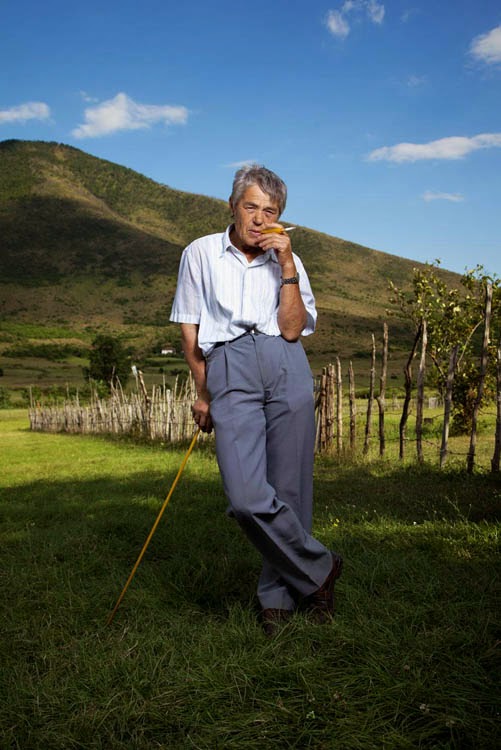
Photographer Jill Peters went looking for the last sworn virgins of Albania.

A Solemn Declaration, Sworn Virgins of Albania 2009 - 2013

"Sworn Virgin" is the term given to a biological female in the Balkans who has chosen, usually at an early age, to take on the social identity of a man for life. As a tradition dating back hundreds of years, this was sometimes necessary in a society that lived within tribal clans, followed the Kanun, an archaic code of law, and maintained an oppressive rule over the female gender. The Kanun states that women are the property of their husbands. The freedom to vote, drive, conduct business, earn money, drink, smoke, swear, own a gun or wear pants was traditionally the exclusive province of men. Young girls were commonly forced into arranged marriages, often with much older men in distant villages. A family suddenly without a patriarch or male heir would find themselves in jeopardy of losing everything.As an alternative, becoming a Sworn Virgin, or 'burnesha" elevated a woman to the status of a man and granted her all the rights and privileges of the male population. In order to manifest the transition such a woman cut her hair, donned male clothing and sometimes even changed her name. Male gestures and swaggers were practiced until they became second nature. Most importantly of all, she took a vow of celibacy to remain chaste for life. She became a "he".

Sworn Virgins still exist today, but as modernization inches towards the small villages nestled in the Albanian Alps, this archaic tradition is increasingly seen as obsolete. Only a handful remain.

See more of Jill Peters work: here

Read more about Gender-theme for FASHIONCLASH Festival 2015: here


Drag Queens of San Francisco


Berlin based photographer, Joseph Wolfgang Ohlert, photographed drag queens in San Francisco.

http://josephwolfgang.ohlert.de

Read more about Gender-theme for FASHIONCLASH Festival 2015: here

maandag 2 februari 2015

Gender hits the catwalks

Topic of sexuality and gender in fashion is still perceived as controversial, however it cannot be prescribed as new. Jean Paul Gaultier has big interest in the trans-gender vision of the clothing, as well as division between sexes. He claimed that: “Except for the medieval codpiece and the bra, garments have never had a gender”. In 1985, Jean Paul Gaultier caused a shock in the fashion’s world by introducing the men-skirt – gossip has it, that fashion journalists and editors left the fashion show. 


Balancing on sexual border has been reached in many shows which have taken place in January. Due to upcoming FASHIONCLASH festival edition, our eyes seems to enrich with “gender-radar”, which is detecting any form of design, which goes beyond boundaries of sexual categorization. 


Related Posts Plugin for WordPress, Blogger...