Posts tonen met het label sustainability. Alle posts tonen

zondag 15 oktober 2017

Fashion Makes Sense Award 2017

MUKASHI MUKASHI
FASHIONCLASH presents, in collaboration with Province Limburg, the ‘Fashion Makes Sense Award’, a stimulation award for conscious young designers. The Fashion Makes Sense award is awarded during the Dutch Earth Week (October 2017) in Maastricht. Out of the finalists, a jury chose one winner that’ll be rewarded with a money prize of €2.500. This prize will be used to produce a sustainable collection, which will be presented during FASHIONCLASH Festival 2018. In addition, an audience winner was chosen, this winner will receive a cash prize of €500.

MUKASHI MUKASHI by Birutė Mažeikaitė won the Fashion Makes Sense Award jury prize. The audience award went to Maastricht based knitwear label STRIKKS.

The jury, consisting of Carry Somers (founder Fashion Revolution), Desiree Kleinen (Ree projects) Jasmien Wynants (Flanders DC/Close the loop) and fashion designer Elsien Gringhuis, was unanimous about the sustainable fashion brand MUKASHI MUKASHI.

The awards have been presented on October 12 by Daan Prevoo, deputy of the Province of Limburg. Fashion Makes Sense Award is presented during Dutch Earth Week that took place from 10 -14 October 2017 for the first time.


In addition, Forza Fashion House organized a Sustainable Fashion Falk during the award ceremony. The talk, moderated by Elise Crutzen (fashion editor and writer) featured presentations by Jasmien Wynants and Carry Somers.

Fashion Makes Sense Award is a project by FASHIONCLASH, made possible thanks to support of Province of Limburg. The 9th edition of FASHIONCLASH Festival was dedicated to the theme ‘Fashion Makes Sense’, in which the focus was on the senses and the sense making in relation to fashion. The theme shed light on sustainability in fashion, by giving a stage to initiatives and designers and creating a dialogue between the audience and the fashion industry.

 With ‘Fashion Makes Sense’ FASHIONCLASH wants to excite young designers, the fashion industry and the audience and create awareness about sustainability in fashion. Fashion is of upmost importance in the economy, society, art, and creativity and for each of us. But, it has a downside: the impact on the environment, the exploitation on workers and the influence on our self-esteem. What is the importance of fashion in our society and how can fashion contribute to a better world and welfare.

FASHIONCLASH has the ambition to develop ‘Fashion Makes Sense to a returning part of the yearly FASHIONCLASH Festival and it is their aim to create awareness around this topic. With an annual prize, FASHIONCLASH introduced the ‘Fashion Makes Sense’ jury award and the ‘Fashion Makes Sense audience award. A prize for a promising fashion talent, that’ll have a relevant and innovative idea on the awareness and innovation around sustainability.

dinsdag 11 juli 2017

Fashion Talks at FASHIONCLASH Festival 2017

Looking back to inspiring Fashion Talks 
at FASHIONCLASH Festival 2017

"We live in a rapidly changing world where progress is accompanied by environmental pollution and ethical issues. The fashion world is a mighty billion industry, and like no other is able to create an illusion and seduce us humans and excite our senses. Today's fashion industry is a reflection of society with a strong focus on aesthetics. Our society approaches fashion as a purely visual phenomenon and doesn’t always see the nature of the interaction with the body (of the wearer), despite the fact that fashion is the most intimate form of art, as it is literally worn “on the body”! As a second skin, clothing also enables us to express ourselves and helps us make sense of the world."
- FASHIONCLASH Team

(Does) Fashion Makes Sense? was the question posed during the 9th edition of FASHIONCLASH Festival. Although there is no answer that can satisfy this broad and complex question the panel at the  Fashion Talks provided positive food for thoughts.
Moderated by Saskia van Stein, artistic director at Bureau Europa, a stage was given to a several festival participants and professionals to engage in a discussion about the topic.
The first talk focused more on the senses and the body. Followed by talk that engaged a more broader view on the industry. Does fashion 'as an industry' make sense.

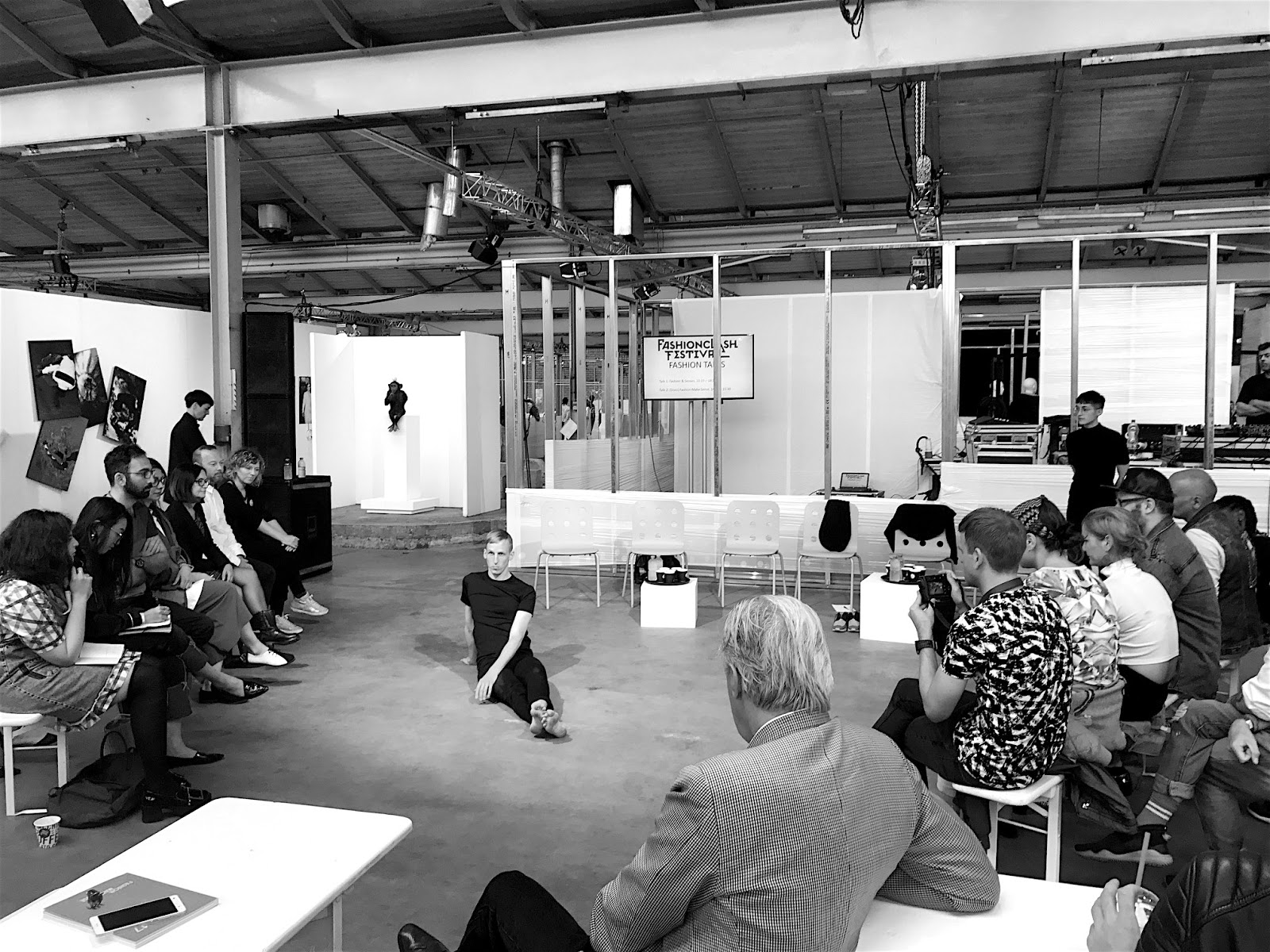
lecture performance Olle Lundin & Floriane Misslin 
Before the talks started, Olle Lundin and Floriane Misslin, provided the perfect introduction with their joint lecture performance.
By extracting postures and re-contextualizing them Olle Lundin hopes to denaturalize the body-language of high fashion. By doing this he has the intention to show the norms, ideals and invisible expectations that are inherent in the visual language discourse of high fashion advertising today! Floriane Misslin focusses on portraying non-binary identities in the mainstream media.  In the Fashion Makes Sense LAB she presented her current project ‘Uni-Sex’.

The speakers Emanuela Corti and Ivan Parati talked about their 'Sensewear' project. Their primary purpose is to stimulate and improve awareness of our senses, while training us to better use them all. Some Sensewear items are designed to mute physical sensations, some to sharpen them. The collection is inspired by therapies applied to Sensory Processing Disorders and developed with the technical support of therapists assisting people affected with autism. Anxiety, stress, panic attack are most typical autism’s symptoms but more and more people suffers them, therefore the collection is not addressed only to people with disabilities but it is aiming at enhancing everyone busy urban life.

Designer Sepideh Ahadi explained how she works and talked about her slow fashion approach. As a designer, Sepideh feels the responsibility to invite her audience to think about fashion in a different and more interactive way through her designs.


Carolyn Mair, the Chartered Psychologist and Chartered Scientist with a PhD in cognitive neuroscience, became an 'instant darling' with her point of view and knowledge.
She developed the MA Psychology for Fashion Professionals and MSc Applied Psychology in Fashion at LCF.
Another expert that shared her knowledge was Rosemarie Ruigrok. After selling her own company, Promax Corporate Fashion, she worked at Amnesty International, Fair Wear Foundation and as CSR consultance at Elsewear Foundation, known by “Green is the new black and as International cotton manager for Fairtrade. In 2007 Roosmarie founded Clean & Unique.

Another speaker was local designer Ebby Port, who expressed her challenges as being a young designer who wants to change the world but feels not as responsible, her statement was that the big companies should take the lead and take responsibility.

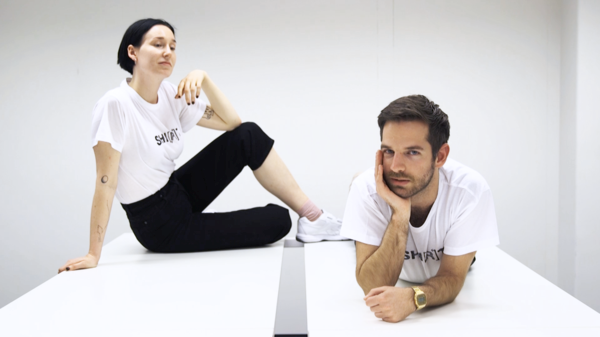
Jeffrey Heiligers and Eva Wagensveld talked about their project online platform SHI[R]T.
"The psychology behind fashion has become less about quality or durabilty and more about being fast, cheap and easy to replace. Does fashion make sense if the quality of the products is high, labour conditions are good and the environmental impact is minimal? In other words: Do you want to buy a shit-shirt, or rather invest in something fair?"

On Friday night they presented a participatory performance in the fashion show program, stirring the audience by literally facing a mirror to everyone.
Several members from the audience were randomly invited on the runway who were then donned with mirrored panels on their chest and back. Mirrors were then held up to seated guests, as questions such as “Do you buy because you can?” and “How come that a sandwich is cheaper than a sweater?” echoed in the background.

Photography Sem Shayne, FASHIONCLASH

donderdag 22 juni 2017

Fashion Talks at FASHIONCLASH Festival 2017

sensewear
photo Eddy Adlan
Fashion Talks at FASHIONCLASH Festival 
Sunday 2nd of July, at SAM-decorfabriek 
Meerssenerweg 215, free entrance 

(Does) Fashion Makes Sense? 
Come and join the dialogue on July 2. 

Through ‘Fashion Makes Sense’ FASHIONCLASH this year focuses on senses and making sense in relation to fashion. Focused around these two topics the Fashion Talks provide an interactive dialogue with the designers, the audience and the fashion industry.

Moderated by Saskia van Stein, artistic director at Bureau Europa, a stage will be given to a several festival participants and professionals to engage in a discussion about the topic. In addition, this is an opportunity to get to know the designers and discover their vision on the future of fashion.
A space will be given to a few designers to talk about the two subjects and make personal contact with other designers, the audience and the fashion industry.


Files Motwary at the Fashion Talk at FCF 2016
So, Does Fashion Make Sense?

We live in a rapidly changing world where progress is accompanied by environmental pollution and ethical issues. The fashion world is a mighty billion industry, and like no other is able to create an illusion and seduce us humans and excite our senses. Today's fashion industry is a reflection of society with a strong focus on aesthetics. Our society approaches fashion as a purely visual phenomenon and doesn’t always see the nature of the interaction with the body (of the wearer), despite the fact that fashion is the most intimate form of art, as it is literally worn “on the body”! As a second skin, clothing also enables us to express ourselves and helps us make sense of the world.

The Fashion Talks are part of the Fashion Makes Sense LAB Sunday program at the SAM-decorfabriek during FASHIONCLASH Festival.

PROGRAM
13:15 – 14:15 Fashion & Senses
- Lecture performance: Olle Lundin x Floriane Misslin
- Talk panel: Sensewear (Emanuela Corti & Ivan Parati), Sepideh Ahadi and Carolyn Mair (Course leader for MA Psychology for Fashion Professionals and MSc Applied Psychology in the Fashion Business School at LCF).

14:30 – 15:30 (Does) Fashion Make Sense? 
- Talk panel: SHI[R]T (Eva Wagensveld & Jeffrey Heiligers) Lucia Chain (CHAIN) and Roosmarie Ruigrok (Clean & Unique).

MEET THE SPEAKERS

Floriane Misslin is a native French creative researcher born in 1992. Her central focus is on portraying non-binary identities in the mainstream media. She followed an education in applied arts near Strasbourg and moved to Paris shortly after, to learn more about fashion design. Feeling too limited by the educational system she left the school in Paris, and moved to Eindhoven to attend the design academy. The wide approach to design brought her back to a more theoretical and critical perspective. She is currently developing her project ‘Uni-Sex’ and works as a freelancer on the side.


Sensewear is a collection of clothes and accessories that emphasize the use of senses. Sensewear consists of two designers, Emanuela Corti and Ivan Parati. Their primary purpose is to stimulate and improve awareness of our senses, while training us to better use them all. Some Sensewear items are designed to mute physical sensations, some to sharpen them. The collection is inspired by therapies applied to Sensory Processing Disorders and developed with the technical support of therapists assisting people affected with autism. Anxiety, stress, panic attack are most typical autism’s symptoms but more and more people suffers them, therefore the collection is not addressed only to people with disabilities but it is aiming at enhancing everyone busy urban life.


menswear, photo Eddy Adlan
All garments are produced using 3d knitted fabrics Gaetano Rossini and Alcantara. Textile sensors and actuators are produced and developed by Comftech our technical partner. Sensewear has won three health and design related award (Lexus Design Award 2015, Wearable Technology at Venice Design Week 2016, AXAPPP Health Tech & You Future Award 2017).


Sepideh Ahadi, as a multicultural brand, is bridging the gap between her pure Middle Eastern background and European life experience. In her work Sepideh embraces the simplicity of the traditional techniques used in Iran, her home place with the elegance found in Italy where she finished her M.A in fashion design and the practical aesthetic of German lifestyle, where she lives and work now. The brand is dedicated to slow fashion and sustainable practices, in that the designer creates her collections through a considered and experimental process.


The collections mostly reflect social issues in the modern lifestyle where the designer challenges herself to find an artistic way to contribute to making a difference. As a designer, Sepideh feels the responsibility to invite her audience to think about fashion in a different and more interactive way through her designs.


Carolyn Mair is a Chartered Psychologist and Chartered Scientist with a PhD in cognitive neuroscience. She developed the MA Psychology for Fashion Professionals and MSc Applied Psychology in Fashion at LCF. In the beginning of her career, Carlyn was a graphic designer and visual merchandiser, she worked for department stores, where she designed and installed store window displays, in-store installations and advertising materials. She was interested in fashion, this led to her designing clothes for herself and friends.


SHI[R]T is an online platform/webshop for designers that offer fair or sustainable products. Not the dull goatysocks kind we all know. But one supporting [young] designers with their own vision. No mass production but small and local production. As a brand being transparent is key, know what you buy. The two people behind this brand are Dutch designers Jeffrey Heiligers and Eva Wagensveld. The psychology behind fashion has become less about quality or durabilty and more about being fast, cheap and easy to replace. Does fashion make sense if the quality of the products is high, labour conditions are good and the environmental impact is minimal? In other words: Do you want to buy a shit-shirt, or rather invest in something fair?


CHAIN is an emerging fashion label based in Buenos Aires, Argentina. Their work has been shown several times at Buenos Aires Fashion Week, Fashion Edition Buenos Aires and International Fashion Showcase – London Fashion week. Committed to the environment, the designs are made by hand with eco, and sustainable fabrics, all natural plant based fibers and uncycled plant based dyes. Zero waste patterns, a-gender fits and sustainable production are important methods of their work and make the clothing to test time.


By extracting postures and re-contextualizing them Olle Lundin hopes to denaturalize the body-language of high fashion. By doing this he has the intention to show the norms, ideals and invisible expectations that are inherent in the visual language discourse of high fashion advertising today!


photo Ayaan Haanewald
Starting as a textile buyer, Roosmarie Ruigrok discovered her passion in fair supply chains. After selling her own company, Promax Corporate Fashion, she worked at Amnesty International, Fair Wear Foundation and as CSR consultance at Elsewear Foundation, known by “Green is the new black and as International cotton manager for Fairtrade. In 2007 Roosmarie founded Clean & Unique. A foundation that help brands and starters in fashion to learn more about sustainability. Today Clean & Unique transformed into an agent for change to create more knowledge and awareness about sustainability in fashion, workwear & textiles by giving advises, training, workshops, inspiration sessions and organizing events. Roosmarie is an International speaker for 15 years and spoke during Premier Vision Paris, Mare di Moda in Cannes but also in Berlin, Rome, London and in the Netherlands. Last March Clean&Unique celebrated it’s 10th anniversary.

woensdag 7 juni 2017

SHI[R]T | FASHIONCLASH Festival 2017

Meet Jeffrey Heiligers and Eva Wagensweld, the designers behind SHI[R]T. Jeff is originally from Voerendaal (a small village in the province of Limburg, in the South of the Netherlands) and Eva is from Woerden, a town located in the middle of the Netherlands. Currently both are based in Amsterdam. Jeffrey graduated from the Design Academy in Eindhoven, from the faculty of Man and Well-being and Eva graduated from AMFI (Amsterdam Fashion Institute), from the faculty of Fashion and Design. The brand SHI[R]T was born out of a frustration that both designers shared about unfair working conditions and high prices to be able to get promoted. They also find that the price to product ratio when it comes to clothing is distorted because people on the other side of the globe make the garments for as little as a couple of cents per day and customers expect high service for low prices even despite that. With SHI[R]T, Eva and Jeff are trying to convey the message that fashion can be made fair to everybody and also be aesthetically pleasant. The project that they will present on the FASHIONCLASH Festival will be a wake up call to change our consumer behavior.

When did you realise you wanted to work in a field of (fashion)design?
JEFF: I think already as a young child it was clear that I liked creating things. Because my approach was quite technical and focused on movement I decided I wanted to study mechanical engineering. In my 3rd year I realized I couldn't do what I wanted to do as it was all focussed on technology and practicality. Aesthetics was out of the picture and I felt I would be able to translate technology into simple shapes and object, that look pleasing and still keep their function. Thats when I started a pre-art school program for the art academy in Maastricht. During this course I felt like a world opened up to me and I applied to the Design Academy Eindhoven and got in.

EVA: When I was hooked on the series ‘The Hills’ in high school. I totally wanted to have a Lauren Conrad life. I had no idea what I wanted to do and it’s kind of crazy to make this decision when you’re 16 years old, but I’m glad she inspired me.

What are so far your main achievements in your career?
JEFF: I think both my graduation projects (Posture and Momentum) are a good representation of what I stand for as a designer. In both I succeeded to translate a technical device into something aesthetically pleasing, with full functioning simplified technology applied.
 Posture had been picked up by the press and was a hit during Dutch Design Week ’15. I have gained a lot of knowledge out of this experience, about your work being recognized and promoted. Making money of it on the other hand is the biggest struggle.

EVA: Graduating without delays before my 21st birthday with my collection ‘We’re flying over the Cuckoo’s nest’ and finding my own design style. Taking this to the next level with BLACKBLEACH and keeping on evolving.

In what projects are you involved at this moment?
JEFF: I just launched a new collection with my studio that is existing out of 5 basic pieces that can be made-to-measure with the sizing tool I designed for Posture. The production process is done in fair way and the pieces are unisex. Next to that I work as freelance prototyper/production manager for Lokbi Enterprises and started collaborating with Eva Wagensveld. We both share the same view on society and we both want to do something about it, but in our own way. Although alone is alone and together you can do more. SHI[R]T for me was born out of a slight frustration of unfair working conditions and high prices to enter competitions or shows to promote your portfolio. I had quite some job interviews over the past 2 years and was mostly offered an un-paid internship or very ridiculous working conditions. I am aware that still we shouldn’t complain about these things because on the other side of the world people are sewing garments together for a couple of cents a day. It feels like society is loosing its touch with what is fair and what isn’t. Especially when it comes to prices products are sold for. I mean… customers expect high service, for low prices and that actually should be impossible.

EVA: Currently I am working on my own brand BLACKBLEACH where I create new garments out of used and/or leftover materials. During AMFI I always liked to design from existing garments because of interesting shapes and details. It started to feel strange to throw away those beautiful ‘toiles’ and only use them for their patterns. So now I handpick beautiful waste and reinvent it. The other project I am involved in is SHI[R]T, together with Jeffrey. SHI[R]T is super exiting to me and Jeff and I are really on the same page, we can have super inspiring whining conversations with each other and then come up with amazing ideas. It’s so cool to find solutions for things that you aren’t happy about.

What do you love the most about your profession?
JEFF: It is amazing to create new things. The feeling that comes with making progress in your process is a kick that gives you drive to keep going with reaching that end goal. When it is finally finished, it isn’t actually finished because of all the new input and inspirations you gathered during the process to start something new. It’s an endless circle of improving yourself and your designs.

EVA: I love to drape around with garments and explore until I am happy about the design. Then finishing it and constantly find solutions by solving detail ‘problems’ is super satisfying. I just really love to create whilst also trying to do something right for the world.


What are your biggest struggles as a young designer/artist?
JEFF: It is annoying to say and sometimes it bothers me, but it is money and time. Unfair offers from big companies and not begin paid for your services. I love what I do, but just as any one else I need to pay my rent at the end of the month. As a young professional I need a job on the side to be able to sustain myself.


How would you define fashion?
'Fashion is a reflection of what is happening around us.'

What fascinates/inspires you and why?
Fast-fashion brands and their customers. The way people don’t think about their purchase. How can a ready to wear garment cost €10,- if you take all the labour-, material- and transport costs in to consideration?

What challenges did you face during the design process?
JEFF: The biggest challenge was creating the measuring system for Posture. It was a big game of trial and error. Making a Posture garment is very precise work and it took a long, long time to create a digital system to produce an individual piece for each customer.

EVA: Finding the time to design and really finish garments. Sometimes I have so many ideas that it’s tempting to create something new all the time and not finish all the details of other designs. It’s also always a surprise if there will be something useful in the thrift shops / markets. And when I don’t find anything I have no material.

Why have you decided to participate at FASHIONCLASH Festival?
Because the theme fits our platform like a glove.

What are your thoughts regarding ‘religion and fashion’?
Interesting, but possibly dangerous.

Does fashion makes sense to you? 
No. Does fashion make sense if the quality of the products is low, the labour conditions are poor and it harms the environment terribly? The psychology behind fashion has become less about quality or durability and more about being fast, cheap and easy to replace.

What are your thoughts on making ‘fashion’ more environmentally-friendly?
It’s necessary!
'People should make conscious decisions about their purchases. Don’t buy because you can, but buy something because you need it.'

What are your thoughts on the senses in relation to the human body?
The relation to the human body got lost. The standard confection measurement is nowhere to be found and models are either super skinny or overweight.

Do you think that fashion can contribute to a better world / better well-being, and what do you do to make a difference? 
Yes, we need society to be conscious and make it easy for the consumer to buy the right things. With SHI[R]T we want to make it easy for people to find fashion forward products that are created by [young] local designers. This by offering all these designs on one webshop. Instead of going to webshops like Zalando, de Bijenkorf or Asos, go to www.shitshirt.nl and buy sustainable!


What senses are engaged in your creation process?
JEFF: Touch and vision
EVA: Vision and touch.

How does technology change your creation process?
JEFF: Without technology there is no process.
EVA: It’s super useful to always have my extended brain [iPhone] with me.

What’s a standard day for you?
SHI[R]T, SLEEP, EAT, REPEAT.

Vegan, vegetarian, healthy diet or any food will do?
Healthy food [vegan].

What’s your favorite song at the moment?
Money - The Flying Lizards.

Best TV-show/movie at the moment?
Minimalism.

What is your bad habit?
Working whilst being underpaid.

Are you a people's person or a loner?
People’s person.

Do you have a pet?
Yes, our boyfriends.

Your favorite quote?
Life would be tragic if it weren't funny. - Stephen Hawking.

What’s your favorite city?
Amsterdam.

Who is your biggest example/idol?
Iris Apfel.

Favorite magazine?
Playgirl, we don’t like fashion magazines.

Your favorite hashtags #?
#shitshirt #fuckfastfashion #savethechildrenofbangladesh

You favorite social media app?
 LinkedIn, to find unpaid internships.

Instagram account you think deserves more attention?
@shi.r.t

Jeff and Eva have a website where you can read more about their stance on contemporary fashion design, and check out their garments. Take a peek at it by clicking here.    

zaterdag 18 juni 2016

Elegnano footwear at FASHIONCLASH Festival 2016

photo: Gunther Vansteelant
Meet Belgian shoedesigner Katrien Herdewyn and her women's shoe brand Elegnano, which offers elegant, exclusive shoes made for fashionable, gracious women who are confident. Italian craft and high-tech innovations are being combined into unique designs creating luxury and sustainability.

In 2010 she graduated in civil engeneering at KU in Leuven and in 2014 she graduated in footwear design at Academy of Fine Arts Sint-Niklaas. Because of the two completely different educations, she has a very wide spectrum of interests and set of skills.

You can see and buy Katrien Herdewyn's work at the Designer Market. Friday July 1 open at 18:30 and Saturday July 2 open at 16:00 (free entrance).

When did you realize you wanted to be a designer? How long have you been designing shoes? 
As long as I can remember I was obsessed with shoes. For some time, I designed and made clothes, because it making shoes without the right machinery is very difficult. Only at the age of 23 I shifted back from clothes to shoes.

Related Posts Plugin for WordPress, Blogger...